Self-Walking Tour in Korca: 2026 Guide
Korca, in southeastern Albania, is one of the Balkans’ most rewarding cities to explore on foot. Known for elegant architecture, a lively café culture, artisan traditions, museums, and one of Albania’s most atmospheric historic bazaars, the city feels both distinctly Albanian and wonderfully cosmopolitan. A self-guided route gives you time to notice the details: carved stone entrances, colorful facades, quiet courtyards, old shop signs, and locals gathering for coffee beneath the trees.
This Self-Walking Tour in Korca is designed for independent travelers who want the freedom to set their own pace while still following a logical sightseeing route. You can complete the core walk in around two to three hours, but I recommend allowing at least half a day if you plan to visit museums, stop for coffee, browse the Old Bazaar, and enjoy a traditional meal. The route is compact, mostly easy to walk, and ideal for couples, families, photographers, solo travelers, and anyone interested in Albanian history and everyday city life.
For the most convenient experience, begin with the dedicated Self-Walking Tour in Korca. It is built around the city’s principal cultural and historical highlights, including the cathedral and Old Bazaar, and allows you to explore without the fixed schedule of a group excursion.
Why choose a self-walking tour in Korca?
Korca is exceptionally suitable for independent walking. Its central landmarks are close together, the streets are generally easy to navigate, and the city rewards a slower rhythm. Unlike larger Balkan capitals where attractions can be scattered across a wide urban area, Korca’s historic center can be experienced as a sequence of short, enjoyable walks.
From my own time exploring Korca, the greatest pleasure is not simply checking off monuments. It is the transition between them. One moment you are standing before a grand Orthodox church; a few minutes later, you are passing a leafy boulevard lined with cafés, then entering a stone-built bazaar where restaurants and small shops occupy historic buildings. The city’s character is revealed in these spaces between the major sights.
- Flexible timing: stop whenever a street, café, museum, or courtyard catches your attention.
- Local atmosphere: walking brings you closer to daily life than a vehicle-based itinerary.
- Good value: the main cost is usually museum entry, food, drinks, and optional transport.
- Photographic variety: Korca combines architecture, mountain views, public art, markets, and intimate lanes.
- Easy planning: the principal route can fit into a morning or afternoon.
Quick facts before you start
Recommended duration: two to three hours for the essential route, or four to six hours with museums and a meal.
Walking distance: approximately three to five kilometers, depending on detours and the attractions you enter.
Difficulty: easy to moderate. Most of the center is manageable, although some historic paving can be uneven.
Best starting area: central Korca, near the cathedral and main pedestrian streets.
Best seasons: spring, early summer, and autumn are especially comfortable. Winter can be atmospheric and festive, but temperatures are often cold.
Indicative budget: allow roughly €10–€25 per person for museum admissions, coffee, a snack, and lunch, excluding accommodation and transport. Prices can change, so carry Albanian lek and confirm current entrance fees locally.
Stop 1: Korca Cathedral and the central square
Begin your walking tour near the Resurrection of Christ Cathedral, commonly known as Korca Cathedral. Its prominent position and striking design make it one of the easiest landmarks from which to orient yourself. The cathedral is an important religious site for the city’s Orthodox community and a visual symbol of modern Korca’s skyline.
Take a few minutes to observe the proportions, domes, decorative details, and surrounding open space. Depending on the time of day, you may find worshippers arriving quietly, families meeting nearby, or residents moving through the center on everyday errands. Visitors should dress respectfully when entering religious buildings and follow any local instructions about photography.
From the cathedral, continue toward the central pedestrian area. This is a good place to get your bearings, buy water, and make a first coffee stop. Korca’s café culture is central to its identity, and a short pause here is not wasted time. Coffee is commonly priced at approximately €1–€2, while a pastry or small snack may cost around €1–€3, depending on the venue.
Stop 2: The National Museum of Medieval Art
One of Korca’s most significant cultural attractions is the National Museum of Medieval Art. It houses an important collection connected with Orthodox religious art, including icons and other works that illuminate Albania’s artistic and spiritual heritage. Even travelers who do not usually visit museums will find the collection valuable because it provides historical context for the churches and religious traditions encountered around the city.
Plan approximately 45 minutes to one hour here. A museum visit is particularly useful during the hotter part of the day in summer or on a rainy afternoon. Entrance fees and opening arrangements may vary in 2026, so check locally or confirm the latest information before you arrive. As a practical rule, budget a few euros for admission rather than relying on an old online price.
When visiting, move slowly and read the explanatory panels where available. The collection is not simply a display of beautiful objects; it reflects centuries of regional history, craftsmanship, devotion, and cultural exchange. This stop also makes the rest of the walking tour more meaningful, especially when you later notice religious architecture and decorative motifs in the city streets.
Stop 3: Mësonjëtorja and Korca’s educational history
Korca holds a special place in the history of Albanian education. The Mësonjëtorja, associated with the first Albanian-language school, commemorates an important moment in the development of national education and written culture. Its story helps explain why Korca is often described as one of Albania’s intellectual and cultural centers.
Allow around 30 to 45 minutes for this stop, depending on whether the museum is open and how deeply you explore the exhibits. The displays can help visitors understand the importance of language, education, and cultural identity in a period when schooling in Albanian carried considerable significance.
For me, this is one of the most rewarding stops for travelers who want more than architectural photographs. Korca’s beauty is visible in its buildings, but its deeper identity is also rooted in ideas: education, literature, music, faith, and civic pride. After visiting, continue through the central streets and pay attention to the distinctive relationship between public institutions, private homes, and cafés.
Stop 4: Korca’s boulevards, villas, and café culture
Next, let the route become less formal. Walk along the central boulevards and residential streets, where Korca’s architecture becomes the attraction. Look for traditional stone walls, tiled roofs, painted shutters, decorative balconies, and villas influenced by different periods of Balkan and European design.
The city is sometimes called the “Paris of Albania,” a nickname that reflects its cultural reputation, urban elegance, and long-standing café culture. While every comparison has limits, the phrase helps communicate the pleasure of strolling through streets that feel more refined and relaxed than many visitors expect. The best way to experience this atmosphere is to slow down and avoid treating the route as a race.
Photography is excellent in the morning, when the light falls softly across facades, and during the late afternoon, when warm tones bring out the textures of stone and plaster. If you visit in summer, schedule your longest outdoor walk before midday or after 16:00. In spring and autumn, the middle of the day is usually comfortable for walking.
Stop 5: The Old Bazaar of Korca
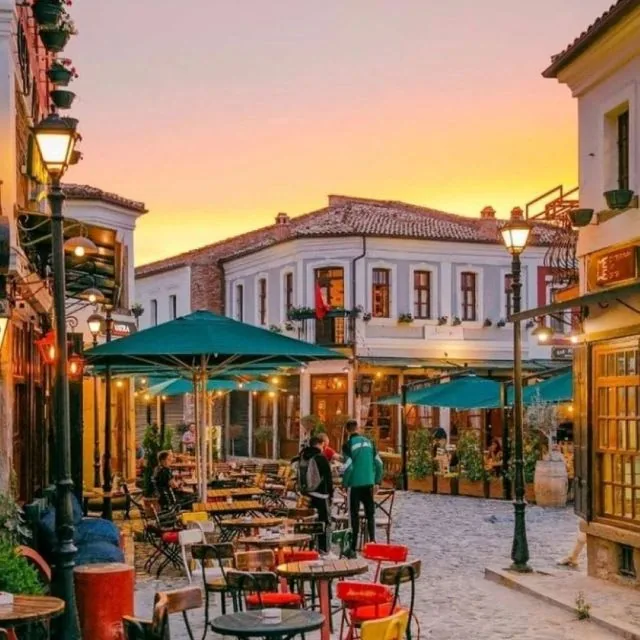
The highlight for many visitors is the Old Bazaar of Korca. This historic quarter is composed of narrow lanes, stone buildings, small shops, restaurants, bars, and craft-oriented businesses. It is both a heritage area and a living neighborhood, so the experience changes throughout the day.
Arrive in the late morning for a quieter look at the architecture, or return in the evening when restaurants and bars create a livelier mood. I recommend doing both if your schedule allows. During the day, you can focus on facades, doorways, courtyards, and small details. At night, the warm lights and outdoor seating make the quarter ideal for dinner.
Do not expect every part of the bazaar to function like a conventional market. Its charm lies in the combination of historic urban fabric and contemporary hospitality. You may find local products, souvenirs, traditional dishes, regional drinks, and cafés rather than a single concentrated shopping hall.
For lunch or dinner, budget approximately €8–€18 per person for a satisfying meal at a casual or mid-range restaurant, although prices vary. Ask about local specialties and seasonal ingredients. Korca is particularly associated with hearty regional cooking, dairy products, pastries, and distinctive local drinks. If you want to enjoy a longer meal, reserve at least 60–90 minutes.
Stop 6: Old churches and the city’s religious heritage
As you move around the historic center, look for Korca’s older churches and religious sites. Some are modest from the outside but culturally important, and their presence reflects the city’s long Orthodox tradition. Opening hours can be irregular, especially outside major services, so treat these visits as opportunities rather than guaranteed timed entries.
Dress modestly when entering a church, keep your voice low, and ask before photographing people or religious ceremonies. Even when a building is closed, its exterior, surrounding lane, and relationship to the neighborhood are worth observing. This is also a good point to remember that self-guided travel requires cultural awareness: the route is yours, but the places you visit belong to living communities.
Stop 7: A relaxed finish in Korca’s cafés
End your self-walking tour with a café break near the central pedestrian streets or return to the Old Bazaar for an early dinner. Korca is a city where sitting down is part of the sightseeing experience. Order a coffee, lemonade, dessert, or regional drink and watch the rhythm of the city change.
A final pause is especially worthwhile if you have been taking photographs. Review your route, identify buildings you want to revisit, and ask your server or a local resident for a recommendation for dinner. Albanian hospitality is often direct and generous, and a simple conversation can lead to a memorable food or day-trip suggestion.
Practical planning for 2026
How to arrive in Korca
Korca is connected by road with Tirana and other Albanian destinations, as well as with the southeastern border region. Bus schedules can change seasonally, so check departure times close to your travel date. If you are driving, remember that central streets may be busy and parking close to the Old Bazaar is not always convenient. Leave the car outside the most pedestrian-focused area and complete the route on foot.
Korca also works well as part of a broader Albania itinerary. Travelers interested in seeing multiple regions can consider the Classical Tour of Albania or the broader Hidden Albania journey through mountains, villages, and seaside towns. These options are useful when you want professional logistics combined with cultural sightseeing beyond Korca.
What to pack
- Comfortable shoes with good grip for historic paving.
- A reusable water bottle, especially from June through August.
- A light jacket for spring evenings and mountain-influenced weather.
- Sun protection, sunglasses, and a hat in summer.
- Small Albanian lek notes for cafés, snacks, and minor purchases.
- A portable battery if you use your phone for maps and tour information.
Best time to take the walk
Spring brings pleasant temperatures and fresh greenery. Summer offers long daylight hours but can be warm, so start early or walk later in the afternoon. Autumn is excellent for photography, food, and comfortable sightseeing. Winter can be quiet and atmospheric, particularly around festive periods, but confirm museum schedules and bring warm clothing.
How Korca fits into a Balkan itinerary
Korca is a strong choice for travelers exploring the cultural triangle of Albania, Kosovo, and North Macedonia. If you are continuing north, the historic atmosphere of Korca pairs naturally with a Self-Guided Tour of Prizren, another city where religious heritage, old streets, and lively cafés come together. Travelers based in Kosovo can also explore the capital with this Self-Guided Tour of Pristina.
For North Macedonia, Ohrid offers a different but equally compelling combination of history and waterfront scenery. The Ohrid Old Town Walking Tour and panoramic lake cruise is a natural addition for travelers who enjoy historic towns. If you are staying in Skopje, the self-guided walking tour of Skopje provides another independent way to explore the region.
Korca itself deserves more than a rushed stop. Spend one night if possible, especially if you want to experience the Old Bazaar after dark or visit museums at an unhurried pace. A one-day visit works well, but an overnight stay reveals a calmer side of the city that day trippers may miss.
Frequently asked questions
How long does the Self-Walking Tour in Korca take?
The essential route takes approximately two to three hours. With the National Museum of Medieval Art, Mësonjëtorja, extended café stops, photography, and a meal in the Old Bazaar, plan four to six hours.
Is Korca easy to explore without a guide?
Yes. The central landmarks are relatively close together, and Korca is a comfortable city for independent travelers. A self-guided tour provides structure while allowing you to pause, change the order of stops, and spend more time at the places you enjoy most.
What is the best season for a Korca walking tour?
Spring and autumn offer the most comfortable temperatures and attractive light. Summer is also enjoyable if you walk in the morning or late afternoon. Winter is quieter, but check attraction opening hours and prepare for cold weather.
How much money should I budget for the walk?
For a typical day, €10–€25 per person is a reasonable starting estimate for museum admissions, coffee, snacks, and a casual meal, excluding transportation. Carry Albanian lek because smaller cafés and shops may prefer cash.
What are the main highlights of Korca?
The most important highlights include Korca Cathedral, the National Museum of Medieval Art, Mësonjëtorja, central boulevards and historic villas, older religious sites, and the Old Bazaar. The city’s cafés and food culture are also essential parts of the experience.
Start exploring Korca independently
Korca is at its best when experienced slowly: begin with the cathedral, learn from its museums, wander through elegant streets, and finish among the stone lanes of the Old Bazaar. This route gives you a practical introduction to the city while leaving room for the unexpected discoveries that make independent travel memorable.
Ready to explore? Plan your route with Balkan Destination’s Self-Walking Tour in Korca and discover one of Albania’s most distinctive cultural cities at your own pace.
Frequently Asked Questions
How long does the Self-Walking Tour in Korca take?▼
The essential route takes approximately two to three hours. With museums, café stops, photography, and a meal in the Old Bazaar, plan four to six hours.
Is Korca easy to explore without a guide?▼
Yes. The central attractions are close together, and a self-guided route gives you structure while allowing flexible stops and pacing.
What is the best season for a Korca walking tour?▼
Spring and autumn are especially comfortable. Summer is enjoyable in the morning or late afternoon, while winter is quieter but colder.
How much does a day in Korca cost?▼
A reasonable starting estimate is €10–€25 per person for museum admissions, coffee, snacks, and a casual meal, excluding transport and accommodation.